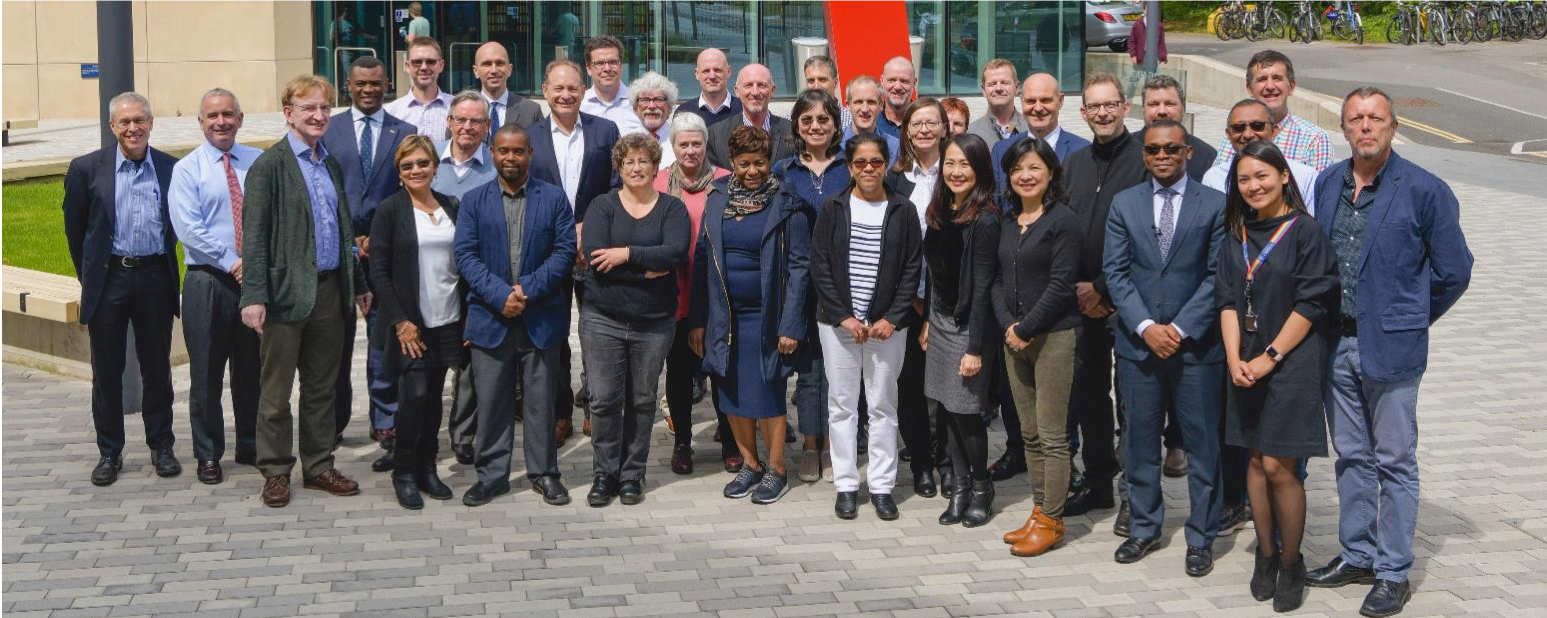
The International PfSPZ Consortium met in Oxford on May 7, 2019
Thirty-three malaria experts gathered at the University of Oxford, with many more joining remotely, for the International PfSPZ Consortium meeting on May 7, 2019. This meeting occurred the day before the Malaria Vaccines for the World conference, also in Oxford. The meeting was opened by members of the consortium from Sanaria (Dr. P. F. Billingsley and Dr. S. L. Hoffman), the Ministry of Health of Equatorial Guinea (H. E. M. Ondo’o Ayekaba), and Tübingen University (Prof. P. G. Kremsner). The meeting started with a review of recent data, leading to a better understanding of the needs for the Phase 3 clinical trials of Plasmodium falciparum sporozoite (PfSPZ) Vaccine in Equatorial Guinea, USA and Europe. In particular, results of clinical trials in EG leading to the selection of the PfSPZ Vaccine dose regimen were presented.
Most of the meeting was aimed at reviewing the Phase 3 program. Dr. Jongo reviewed data gathered for an incidence study based in Malabo; the incidence rates of malaria will be assessed until September 2019 and will inform the location and design of the Phase 3 trial. There followed a brainstorming on matters related to the Phase 3 clinical trial, including enrollment criteria, endpoints (Parasitemia, Clinical Malaria, Clinical Malaria Consultation), the need for boosting, Thick Blood Smear (TBS) validation, the role of PCR in diagnostics and treatment, selection of age groups, clearance of parasitemia, and immunology.
In addition the impressive results of the second PfSPZ-based vaccine, PfSPZ-CVac, were reviewed, including the use of different antimalarial partner drugs and exciting developments for combining genetically attenuated parasites with antimalarial drugs.
There is tremendous excitement in the iPfSPZ-C for the progress towards and plans for licensing PfSPZ Vaccine and its implementation. The final part of the program reviewed innovative plans for next-generation manufacturing and protective immunity.