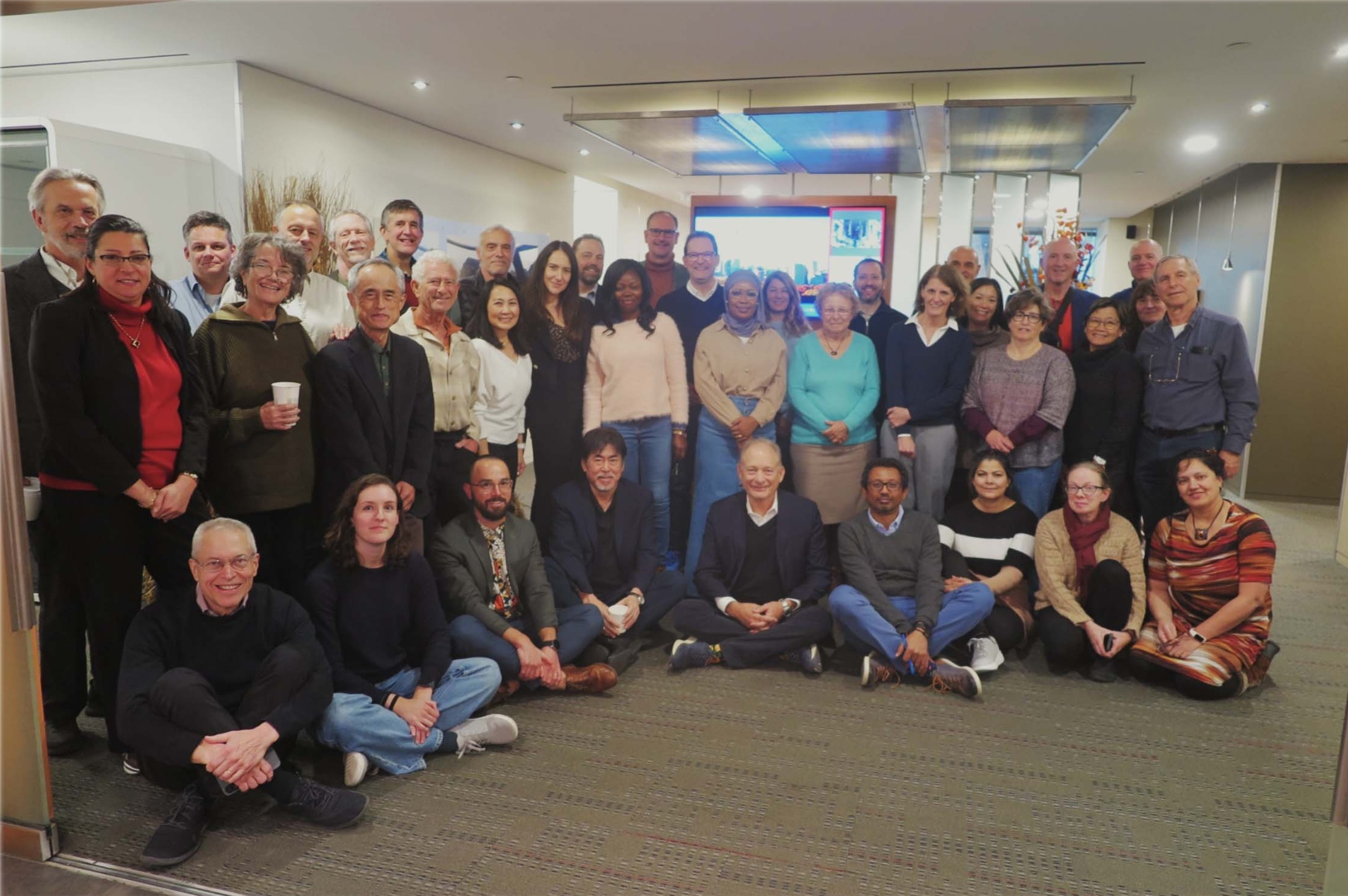

The Annual International PfSPZ Consortium Met in Toronto, Canada on November 8th & 9th, 2025
2025 International PfSPZ Consortium (iPfSPZ-C) Meeting Toronto, Canada • 8–9 November
The 2025 iPfSPZ-C meeting brought together scientists from around the world to review an extraordinary year of progress in Plasmodium falciparum sporozoite (PfSPZ) vaccine and other SPZ research. Over a day and a half, 48 scientists from 11 countries presented major scientific breakthroughs, steady advances in product development, and coordinated plans for global evaluation of Sanaria’s PfSPZ-based malaria vaccines to the in-person participants and on-line participants around the world. Selected highlights are below followed by the full agenda.


Opening Sessions: Setting the Stage
Dr. Stephen L. Hoffman opened the meeting with a call for bold innovation to finally outpace the malaria parasite—an urgent challenge as drug and insecticide resistance continue to rise. Dr. Chris Ockenhouse of the Gates Foundation followed with the Foundation’s perspective on malaria vaccine development, emphasizing the need for high-efficacy vaccines capable of impacting transmission at population scale.
A Landmark Finding: Maternal Vaccination Protects Infants
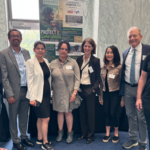
One of the most striking presentations came from Dr. Halimatou Diawara (University of Sciences, Techniques, and Technologies of Bamako, Mali) (2nd from left in photo above) and colleagues from the LMIV, NIAID, NIH team led by Dr. Patrick Duffy. They reported a remarkable and unexpected result from a study of Sanaria’s first-generation radiation-attenuated PfSPZ Vaccine.
When the vaccine was administered to women before conception, their infants experienced a 95.6% reduction in clinical malaria during the first year of life. This unprecedented maternal–offspring protection finding is one of the most consequential outcomes ever observed in a malaria vaccine trial and opens a new potential pathway for protecting the youngest and most vulnerable children while protecting their mother during pregnancy.
Advancing Vaccine Design: A Next-Generation Hybrid Strain
In the session “Making a Better Vaccine,” scientists from Sanaria, Seattle Children’s Research Institute (SCRI), the University of Maryland Baltimore, and Penn State described a genetic cross between the current West African vaccine strain (NF54) and an East African P. falciparum strain. The resulting hybrid parasite is as efficient to manufacture as NF54 but contains diverse antigenic sequences from both regions, broadening the geographic coverage of any vaccine derived from this parasite. The hybrid also produces a substantially greater antigenic load in the liver than NF54 — features expected to enhance breadth and strength of protective immunity.
Day 2: Clinical Development Progress and Global Introduction Pathways
Dr. Rafiq Okine of WHO began the second day with an overview of malaria vaccine rollout worldwide and the growing pipeline of next-generation candidates.
Much of the rest of the day focused on clinical development of Sanaria’s flagship third-generation vaccine, PfSPZ-LARC2 Vaccine, a genetically attenuated parasite (double gene deletion) designed to arrest late in the liver stage and induce broad immunity.
Key updates included:
- Development of PfSPZ-LARC2 Vaccine.
- Dr. Stefan Kappe of SCRI described the development of this unique vaccine.
- First-in-human trial in Burkina Faso (Groupe de Recherche Action en Santé [GRAS]).
- Dr. Sodiomon Sirima reported that the ongoing age de-escalation study in children aged 45 years down to 1 year shows excellent tolerability, no significant adverse events, and no breakthrough parasitemia. Investigators also presented molecular assays that distinguish natural infections from vaccine-derived parasites, along with early immunogenicity results.
- Phase 1 trial at the University of Washington (Fred Hutch).
- Dr. James Kublin summarized safety, immunogenicity, and efficacy evaluations currently underway. To date, no safety signals or breakthrough infections have occurred during the vaccination period.
- Planned trials in 2026.
- Dr. Andrea Kreidenweiss (University of Tübingen) described a Phase 1 safety, immunogenicity, and efficacy trial scheduled to begin in January 2026. Dr. Tom Richie (Sanaria) outlined the Phase 2 trial planned for adults in Burkina Faso starting April 2026, along with the broader clinical development strategy: initial licensure for women of childbearing potential and travelers, followed by expanded evaluation for use in elimination campaigns across all age groups. Additional trial proposals for studies in Mali, Kenya, and among Indonesian military personnel were previewed.
Closing Discussion
The meeting concluded with a forward-looking conversation on barriers to achieving WHO’s strategic target of a 90% effective malaria vaccine—and the scientific, operational, and collaborative strategies needed to reach it.
Across all sessions, the 2025 iPfSPZ-C meeting underscored a rapidly advancing field. With new biological insights, promising vaccine candidates, and coordinated global efforts, the path toward highly effective malaria vaccines is clearer than ever.