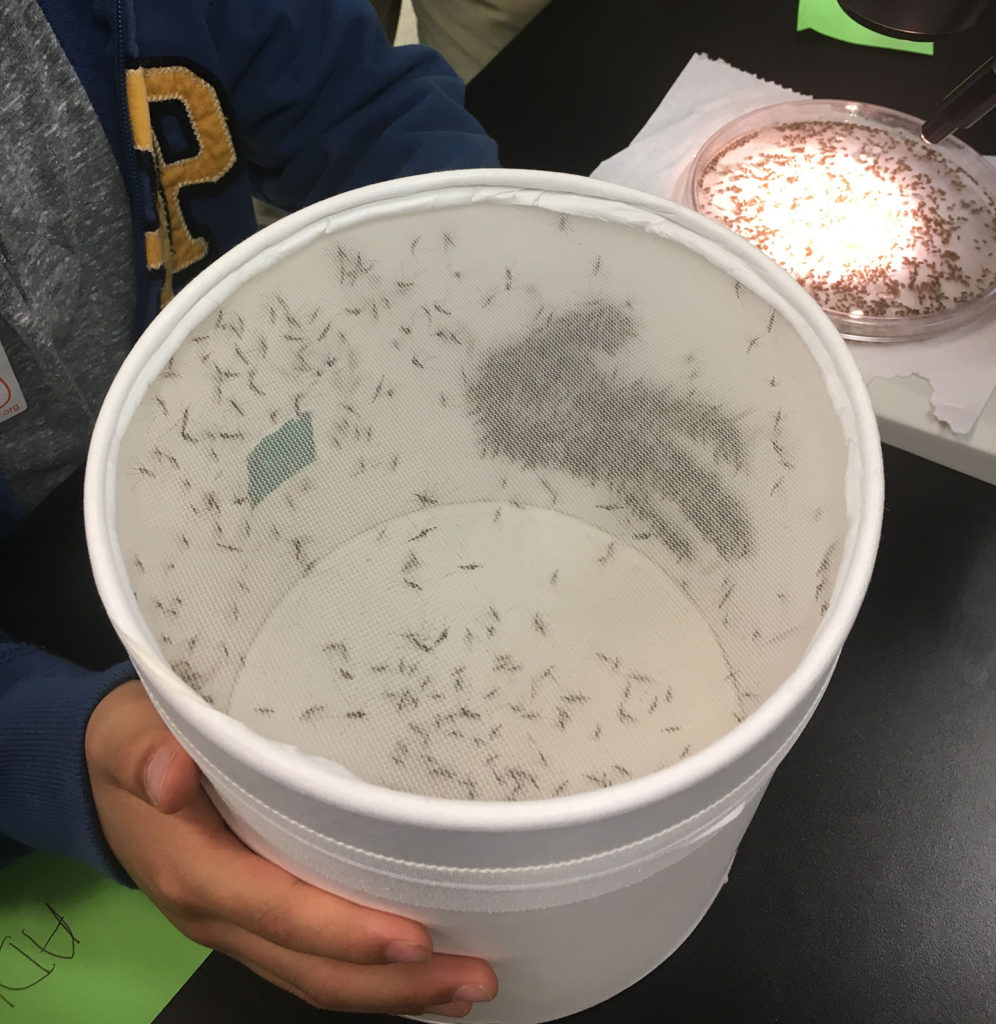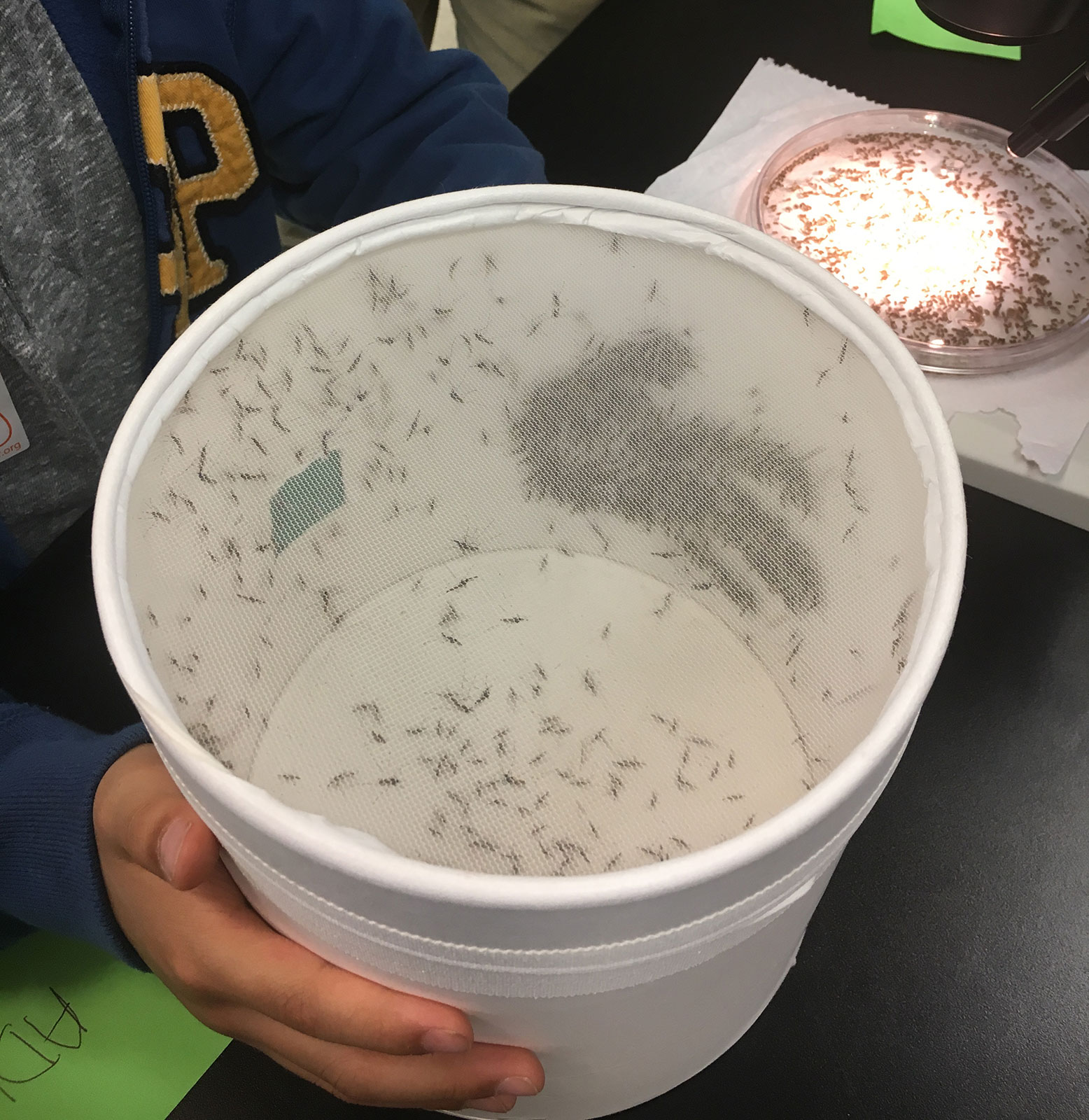
Sanaria exhibits at annual Rockville Science Day
On April 22nd Sanaria participated at the 29th annual Rockville Science Day. Our exhibit featured different stages of the mosquito life cycle and a liquid nitrogen demonstration. For many of the children it was their first time looking through a microscope. At Sanaria we strive to engage with our community and foster scientific curiosity. Check out the future scientists:|
I-PfSPZ-C meets in Senegal
The International PfSPZ Consortium (I-PfSPZ-C) held its semi-annual meeting in Dakar, Senegal on April 19, 2018. More than 40 Investigators from over 20 organizations in over 10 countries attended and presented the status and results of ongoing and recently completed, but unpublished, clinical trials of Sanaria® PfSPZ Vaccine, PfSPZ-CVac and PfSPZ Challenge worldwide.|
Induction of immunity following vaccination with a chemically attenuated malaria vaccine correlates with persistent antigenic stimulation.
Abstract
OBJECTIVES:
Blood stage malaria parasites attenuated with seco-cyclopropyl pyrrolo indole (CPI) analogues induce robust immunity in mice to homologous and heterologous malaria parasites and are being considered for the development of a human vaccine. However, it is not understood how attenuated parasites induce immunity. We showed that following vaccination, parasite DNA persisted in blood for several months, raising the possibility that ongoing immune stimulation may be critical. However, parasites were not seen microscopically beyond 24 h postvaccination. We aimed to provide a mechanistic understanding of immune induction.
METHODS:
Mice were vaccinated with chemically attenuated Plasmodium chabaudi parasites. PCR and adoptive |
Sanaria’s Executive VP Process Development and Manufacturing wins Visionary Leadership Award
Clonal selection drives protective memory B cell responses in controlled human malaria infection.
Abstract
Affinity maturation, the clonal selection and expansion of antigen-activated B cells expressing somatically mutated antibody variants that develop during T cell-dependent germinal center reactions, is considered pivotal for efficient development of protective B cell memory responses to infection and vaccination. Repeated antigen exposure promotes affinity maturation but each time also recruits antigen-reactive naïve B cells into the response. Here, we determined the relative impact of affinity maturation versus antigen-mediated clonal selection of naïve B cells to mount potent B cell memory responses in humans after repeated exposure to a complex pathogen, the malaria parasite Plasmodium falciparum (Pf). Using single-cell |
Impact of Sickle Cell Trait and Naturally Acquired Immunity on Uncomplicated Malaria after Controlled Human Malaria Infection in Adults in Gabon
Abstract
Controlled human malaria infection (CHMI) by direct venous inoculation (DVI) with 3,200 cryopreserved Plasmodium falciparum sporozoites (PfSPZ) consistently leads to parasitemia and malaria symptoms in malaria-naive adults. We used CHMI by DVI to investigate infection rates, parasite kinetics, and malaria symptoms in lifelong malaria-exposed (semi-immune) Gabonese adults with and without sickle cell trait. Eleven semi-immune Gabonese with normal hemoglobin (IA), nine with sickle cell trait (IS), and five nonimmune European controls with normal hemoglobin (NI) received 3,200 PfSPZ by DVI and were followed 28 days for parasitemia by thick blood smear (TBS) and quantitative polymerase chain reaction (qPCR) and |
New film, Hope for Bioko, showcases Sanaria’s work
Rare PfCSP C-terminal antibodies induced by live sporozoite vaccination are ineffective against malaria infection
Abstract
Antibodies against the central repeat of the Plasmodium falciparum (Pf) circumsporozoite protein (CSP) inhibit parasite activity and correlate with protection from malaria. However, the humoral response to the PfCSP C terminus (C-PfCSP) is less well characterized. Here, we describe B cell responses to C-PfCSP from European donors who underwent immunization with live Pf sporozoites (PfSPZ Challenge) under chloroquine prophylaxis (PfSPZ-CVac), and were protected against controlled human malaria infection. Out of 215 PfCSP-reactive monoclonal antibodies, only two unique antibodies were specific for C-PfCSP, highlighting the rare occurrence of C-PfCSP-reactive B cells in PfSPZ-CVac-induced protective immunity. These two antibodies showed poor |
Advancing Global Health through Development and Clinical Trials Partnerships: A Randomized, Placebo-Controlled, Double-Blind Assessment of Safety, Tolerability, and Immunogenicity of PfSPZ Vaccine for Malaria in Healthy Equatoguinean Men
Abstract
Equatorial Guinea (EG) has implemented a successful malaria control program on Bioko Island. A highly
effective vaccine would be an ideal complement to this effort and could lead to halting transmission and eliminating
malaria. Sanaria® PfSPZ Vaccine (Plasmodium falciparum sporozoite Vaccine) is being developed for this purpose. To
begin the process of establishing the efficacy of and implementing a PfSPZ Vaccine mass vaccination program in EG, we
decided to conduct a series of clinical trials of PfSPZ Vaccine on Bioko Island. Because no clinical trial had ever been
conducted in EG, we first successfully established the ethical, regulatory, quality, |
International PfSPZ Consortium Annual Meeting
Sanaria’s malaria vaccines clinical and manufacturing progress highlighted at International meetings in Baltimore
Advancing Global Health through Development and Clinical Trials Partnerships
Safety and efficacy of PfSPZ Vaccine against Plasmodium falciparum via direct venous inoculation in healthy malaria-exposed adults in Mali: a randomised, double-blind phase 1 trial
Abstract
BACKGROUND:
Plasmodium falciparum sporozite (PfSPZ) Vaccine is a metabolically active, non-replicating, whole malaria sporozoite vaccine that has been reported to be safe and protective against P falciparum controlled human malaria infection in malaria-naive individuals. We aimed to assess the safety and protective efficacy of PfSPZ Vaccine against naturally acquired P falciparum in malaria-experienced adults in Mali.
METHODS:
After an open-label dose-escalation study in a pilot safety cohort, we did a double-blind, randomised, placebo-controlled trial based in Donéguébougou and surrounding villages in Mali. We recruited 18-35-year-old healthy adults who were randomly assigned (1:1) in a double-blind manner, with stratification by
Sanaria’s PfSPZ Vaccine Achieves Durable Protection Against Heterologous Malaria Infection in a Clinical Trial
Sanaria’s PfSPZ Vaccine Confers Significant Protection Against Natural Malaria infections in Mali
Sanaria’s PfSPZ-CVac Vaccine Achieves High Level Protection Against Malaria in Clinical Trial
Phase 2 trial in Kenya will assess the safety, tolerability and protective efficacy
The Foundation for Vaccine Research reports on a phase 2 trial in Kenya that will assess the safety, tolerability and protective efficacy of the vaccine administered by direct venous inoculation (DVI) to infants 5-12 months of age, living in an area of high-malaria transmission.|
Attenuated PfSPZ Vaccine induces strain-transcending T cells and durable protection against heterologous controlled human malaria infection
Abstract
A live-attenuated malaria vaccine, Plasmodium falciparum sporozoite vaccine (PfSPZ Vaccine), confers sterile protection against controlled human malaria infection (CHMI) with Plasmodium falciparum (Pf) parasites homologous to the vaccine strain up to 14 mo after final vaccination. No injectable malaria vaccine has demonstrated long-term protection against CHMI using Pf parasites heterologous to the vaccine strain. Here, we conducted an open-label trial with PfSPZ Vaccine at a dose of 9.0 × 10⁵ PfSPZ administered i.v. three times at 8-wk intervals to 15 malaria-naive adults. After CHMI with homologous Pf parasites 19 wk after final immunization, nine (64%) of 14 (95%CI, 35–87%) |