Major Breakthroughs Presented at the International PfSPZ Consortium Meeting
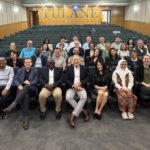
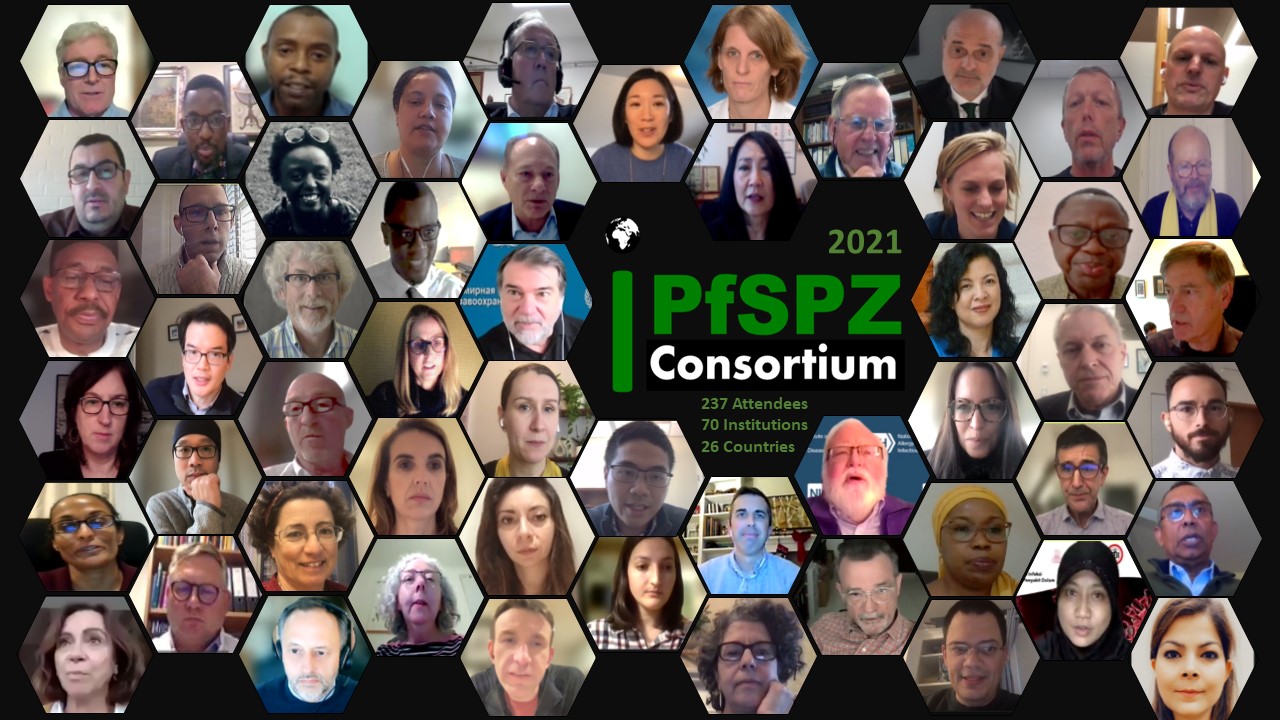
For the second year running, the International PfSPZ Consortium (i-PfSPZ-C) meeting was held as a virtual event on the 9th and 10th December 2021. There were 237 attendees from 70 institutions based in 26 different countries spanning the globe, with colleagues in Australia and Indonesia staying up into the early hours and those on the west coast of the USA rising early to make their contributions to a packed and exciting agenda.
Following a short tribute to the late Professor Malcolm Molyneux, the first session was opened by Dr. Pedro Alonso (Director of the WHO Global Malaria Programme) who placed the PfSPZ vaccine efforts into the context of the worsening global malaria situation and the recent WHO endorsement of RTS,S vaccine to reduce childhood morbidity due to malaria. The message was clear: new tools are needed, and the PfSPZ vaccines, the overview of which was provided by Dr. Stephen Hoffman (CEO, CSO Sanaria Inc.), are the most promising of those new tools which are well advanced in their regulatory pathway (Dr. Anusha Gunasekera, Sanaria Inc.).
That pathway involves developing PfSPZ Vaccine for three important groups – travelers, pregnant women, and children; recent results and planned studies in these three critical areas were presented. For travelers, this included an update on the ongoing Warfighter 3 study in Seattle (Dr. James Kublin. Fred Hutchinson Cancer Research Center, Seattle), and outlines of forthcoming TravSPZV1 trial in US and Germany (Dr. Thomas Richie (Sanaria Inc.), Prof. Peter Kremsner (Eberhard Karls Universität Tübingen), Dr. Kirsten Lyke (University of Maryland – Baltimore (UMB)) and Dr. Patrick Duffy (LMIV-NIAID -NIH)) and the IDSPZV1 trial in deployed soldiers in Indonesia (Dr. Erni Nelwan, EOCRU, Jakarta). While these studies will test the preferred dose regimen of PfSPZ Vaccine, there is a constant push to improve the rigor of controlled human malaria infection (CHMI) using new strains of Plasmodium falciparum (Pf) (Mal31 – Dr. Kim Lee Sim (Sanaria/Protein Potential) and Dr. Ashley Vaughan (Seattle Children’s Research Institute)) and progressing to cross species CHMI with Plasmodium vivax (Dr. Sumana Chakravarty, Sanaria). A clinical pathway for PfSPZ Vaccine in women of childbearing potential is a relatively recent addition to the Sanaria portfolio but is founded on strong ethical and health considerations (Richie). Unpublished data from immunization of Women of Childbearing Potential (Dr. Halimatou Diawara, Malaria Research and Training Centre (MRTC), Mali) showed the best protection yet in any African clinical trial of PfSPZ Vaccine, which has stimulated a new program (Duffy, Prof. Alassane Dicko, MRTC) for which the first clinical trial is already planned (Dr. Sara Healy, LMIV). Children represent another demographic ravaged by malaria (Richie) and the imperative for protecting them with PfSPZ Vaccine was underscored in the presentation of two forthcoming clinical trials in two contrasting epidemiological settings, seasonal malaria in a rural population in Mali (Dr. Issaka Sagara, MRTC) and year-round transmission in an urban population in Malabo, Equatorial Guinea (Dr. Said Jongo, Ifakara Health Institute (IHI) and the Bioko Island Malaria Elimination Program (BIMEP)). One important question about PfSPZ vaccine trials has been whether to clear parasites prior to immunization: the evidence for this is increasingly clear from a number of studies (Dr. Peter Billingsley (Sanaria), Dr. Aye Sousa (LMIV), Diawara and Dr. Carlos Lamsfus Calle (Tübingen)).
This massive program of work undertaken by i-PfSPZ-C members requires support from diverse funders. Dr. Holm Keller (kENUP) outlined a forthcoming major shift in malaria vaccine support in Europe while Dr. Lee Hall (NIH-DMID) emphasized the many successes from NIH-driven support for the PfSPZ program. The consortium is unique in receiving support from African partners and private sector and commitments for this to continue were made by partners from Equatorial Guinea (Bonifacio Manguire (Marathon Oil)) and Nigeria (Chuks Anyaduba (Prince Ned Nwoko Foundation)). The European and Developing Countries Clinical Trials Partnership (EDCTP) encapsulates the collaborative nature of the i-PfSPZ-C (Dr. Pauline Beattie, EDCTP). The moderator (Dr. Annie Mo, DMID) of this final session of the day closed with a challenge to the membership: be disruptive and inventive, then talk to NIH about funding.
The bulk of the second day was allocated to strategies to reduce the cost of PfSPZ vaccines through three parallel tracks – reducing the numbers of PfSPZ needed per dose by alternative attenuation methods, reducing the costs of producing PfSPZ, and improving immune responses. While PfSPZ Vaccine is attenuated by irradiation, its developmental arrest at the early liver stage limits its protective efficacy and requires higher doses: the alternative is to attenuate parasites later in liver stage development to increase the number and diversity of Pf antigens (Richie). PfSPZ-CVac approaches require attenuation with an antimalarial drug and the most recent data using pyrimethamine as the partner drug in a field trial in Mali (Dr. Mahamadoun Assadou (MRTC) and Dr. David Cook (LMIV)) were highly encouraging. The plans for PfSPZ-CVac studies in Indonesia (Prof. Kevin Baird, EOCRU), Germany (Dr. Andrea Kreidenweiss, Tübingen) and Burkina Faso (Dr. Aflred Tiono, Centre National de Recherche et de Formation sur le Paludisme (CNRFP)) were all presented. Pf can also be attenuated by knocking out genes expressed in the liver stages to produce “Late Arresting, Replication Competent” (LARC) vaccine candidates. The development (Vaughan) and GMP manufacture (Sim) of LARC parasites is now well advanced with progress described for both first generation, LARC1 (Dr. Blandine Frank-Fayarde, Leiden University Medical Centre (LUMC)), and second generation, (LARC2) (Vaughan and Sim) approaches which will culminate in clinical trials in Germany (Kremsner) and the US (Dr. Sean Murphy, University of Washington (UWash)).
In order to further reduce cost of goods on the manufacturing, major breakthroughs in the production of billions of PfSPZ in vitro (iPfSPZ) were presented (Dr. Abraham Eappen, Sanaria), the transcriptomes of which are highly similar to PfSPZ from mosquitoes (Dr. Gigliola Zanghi, Seattle Children’s). The strategic importance and future hurdles of pivoting to mass culture of iPfSPZ were made very clear (Hoffman), while future approaches that could be taken to improve iPfSPZ biologically were outlined (Eappen and Dr. Ahmed Aly, Sanaria).
There are also ways to improve the immune responses to PfSPZ vaccines that are being explored. These include the use of a glycolipid adjuvant (Chakravarty), a prime-trap approach to vaccination (Dr. Felicia Watson, UWash), developing PfSPZ with broader antigenic backgrounds and expressing additional antigens (Vaughan and Sim), which may include transmission blocking antigens (Duffy), and using Plasmodium berghei as a non-infectious parasite to deliver human malaria antigens (Dr. Miguel Prudencio, Institute of Molecular Medicine, Lisbon).
The remainder of day 2 was dedicated to our improved understanding of the immune responses to PfSPZ. This started with a brief review of the future prospects (Hoffman) and potential improvements (Dr. Hedda Wardemann, German Cancer Research Center, Heidelberg) of human monoclonal antibodies as immunoprophylactics, and led into the steps taken to develop new model systems in non-human primates (Chakravarty, Duffy and Dr. Melanie Shears (UWash)), plus a new set of rodent parasites expressing Pf and P. vivax antigens (Frank-Fayarde). Larger scale datasets have enables new insights into the immune responses to PfSPZ, including how Kenyan infants can be immunologically predisposed to a protective or non-protective immune response (Dr. Tuan Tran, Indiana University) or how B cell responses to PfSPZ vaccines are shaped by antibodies (Dr. Ian Cockburn, Australian National University), understanding characteristics of Vδ2 ɣδ T cell and human transcriptome responses in the periphery as a proxy for liver immunity (Dr. Irfan Zaidi (LMIV), Dr. Richard Apps and Dr. John Tsang (Center for Human Immunology, NIH)), and the results of a systems serology approach to compare data from different PfSPZ Vaccine clinical trials (Prof. Galit Alter, Ragon Institute) and the RNA-seq approach to understanding the genesis of immunity by administration of PfSPZ by mosquito bite (Prof. Ken Stuart, Seattle Children’s). There are intriguing data emerging that IgA antibodies may be important in the overall immune response to PfSPZ vaccines (Dr. Joshua Tan, Antibody Biology Unit, NIH-NIAID and Dr. Angela Berry, UMB), while in depth analyses of immune responses have led to intriguing and conflicting findings regarding PfMSP5 as a potential target of PfSPZ-induced protective immunity (Dr. Joe Campo (Antigen Discovery, Inc.), Natasha KC (Sanaria), Dr. Anneth Tumbo (IHI) and Dr. Rolf Fendel (Tübingen)).
Despite the many thousands of kilometers between the participants, the discussions after each session were very lively and constructive. We are so grateful to all presenters, moderators and the “behind the scenes crew” for such a wonderful meeting that gives us tremendous encouragement for the big tasks facing us in 2022.